What is the difference between an HDVI cable and a traditional coaxial cable for surveillance cameras?
HDVI (High Definition Video Interface) cables allow for the transmission of high-definition (HD) video signals over longer distances than standard coaxial cables, while using the same BNC infrastructure. They offer better image quality and backward compatibility with analog systems.
What type of HDVI cable is recommended for my camera installation in Morocco?
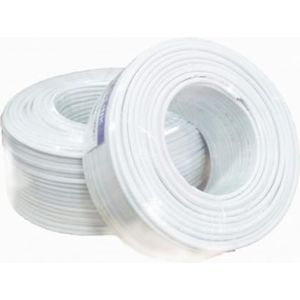
For an installation in Morocco, we recommend good quality HDVI cables that are resistant to local climatic conditions (humidity, heat). The choice will depend on the distance between the camera and the recorder. For long distances, a higher quality cable with good insulation is advised. Our advisors can help you make the best choice based on your project.
Can I use my old coaxial cables with HDVI cameras?
In most cases, yes. HDVI technology is designed to be backward compatible with existing coaxial infrastructure. However, to ensure the best HD video quality, using cables specifically designed for HDVI is strongly recommended, especially for long distances.
What is the maximum length of an HDVI cable?
The maximum length depends on the video resolution and the quality of the cable. Generally, HDVI cables can transmit HD signals over distances of up to 500 meters, or even more for certain advanced technologies and high-quality cables. Check the product specifications for exact limits.
How do I choose the right connector for my HDVI cable in Morocco?
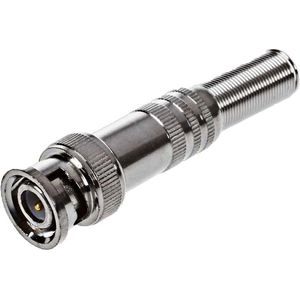
The most common connector for HDVI cables is the BNC connector, which is also used for traditional coaxial systems. Ensure that the cable connectors match those of your HDVI cameras and your recorder (DVR/NVR). We offer cables with different lengths and connector types.
Is it possible to transmit power and video signal over the same HDVI cable?
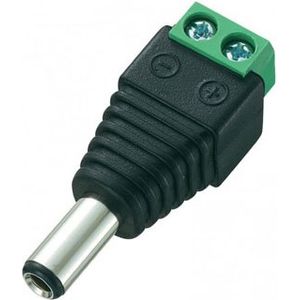
No, the HDVI cable is specifically designed to transmit the video signal. Camera power requires a separate power cable (usually a 12V DC cable). Some transmission systems allow for sending power and signal over the same twisted pair (IP), but this is not the primary function of HDVI cables.